
 Hydration
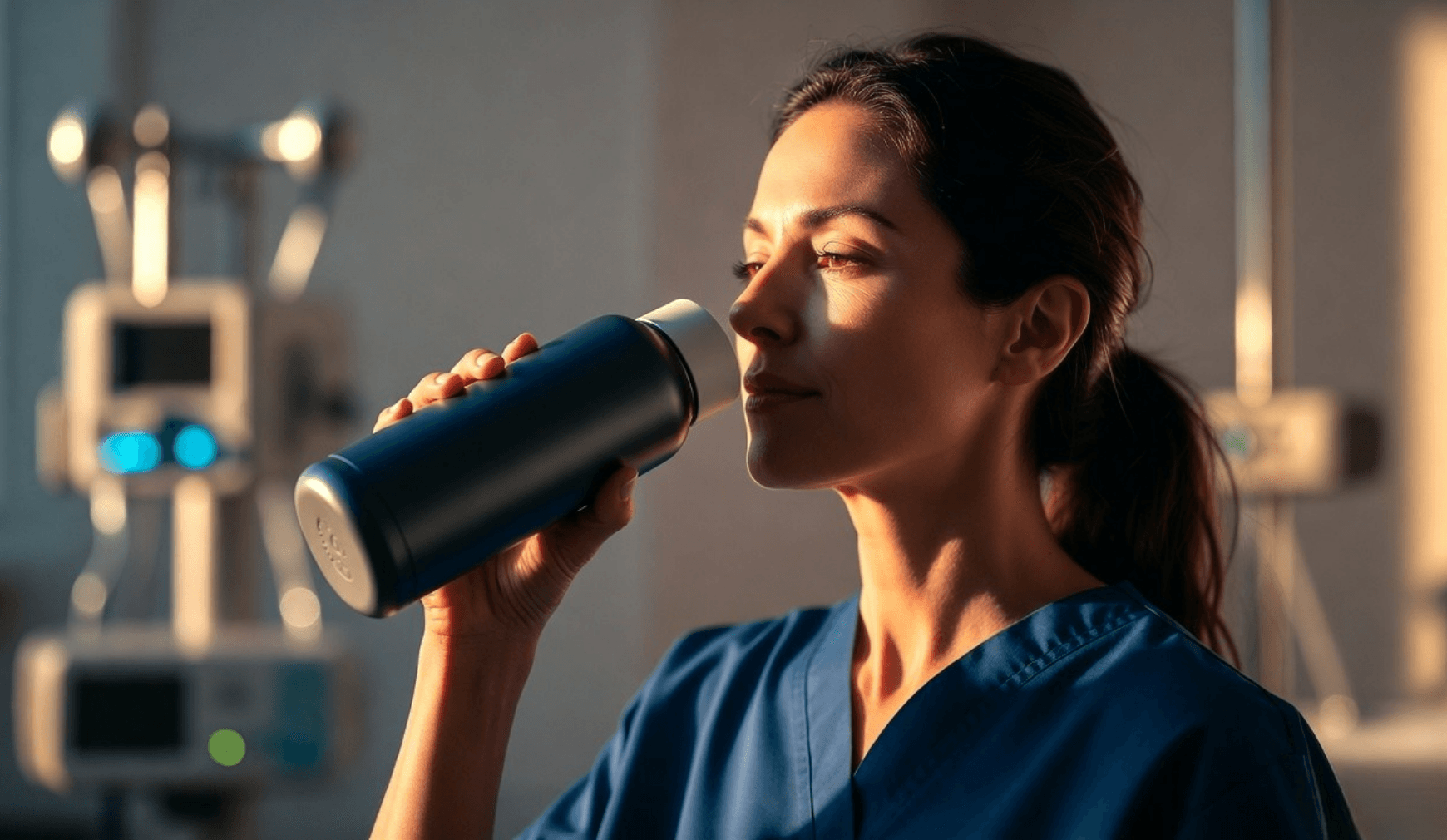
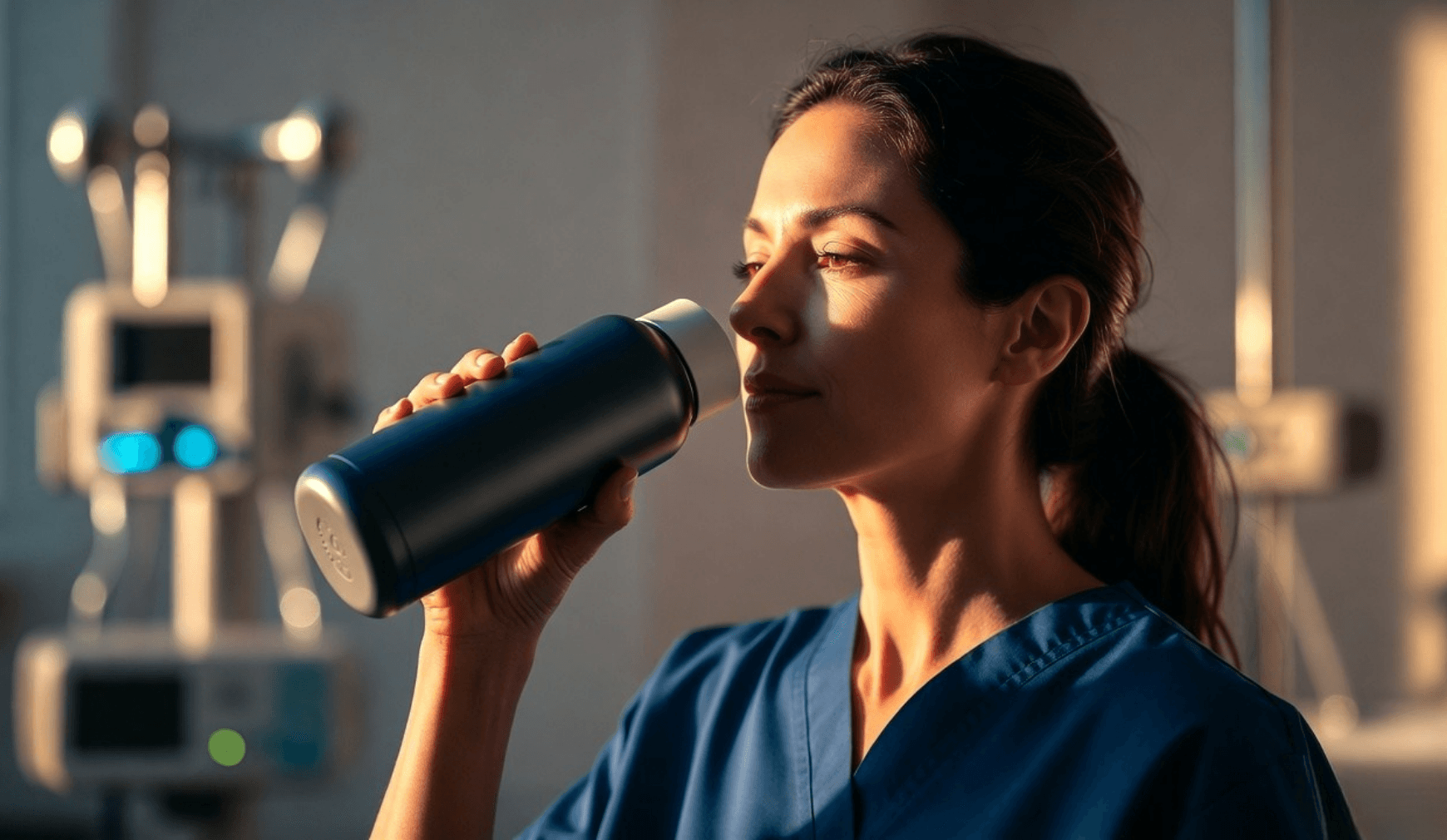
You check every patient's fluid chart. Yours is the one you forget. Long shifts, missed breaks and a full to-do list push drinking to the bottom of the list, and by mid-afternoon you are tired, short-tempered and struggling to think. Often, the cause isn't a lack of willpower or skill. It is a lack of water.
Why hydration matters
Thirst arrives late.
When your body loses fluid, blood volume drops, and your heart works harder to keep blood moving. The brain signals the kidneys to retain water, and thirst follows. By the time you feel it, you are already behind. Studies suggest that even mild dehydration can affect concentration, mood and headaches, and some link it to higher levels of cortisol, the stress hormone.
Fluid is only half the story.
Your body needs water and electrolytes, the salts that help nerves and muscles work. Most days a normal diet supplies the salts, and water covers the rest. Hydration is not a cure for burnout, but a dry body makes every other kind of strain harder to carry.
Why clinicians run dry
The reasons are practical, not personal. Many of us avoid drinking because we cannot leave the ward, the theatre or the consulting room. Heavy PPE and warm rooms increase fluid loss. Night shifts disrupt the usual cues. And putting patients first means the bathroom trip gets postponed again.
Holding on for hours is not a badge of honour. Regularly delaying bathroom trips can raise the risk of urinary tract infections, and cutting back on drinks to avoid them only makes the problem worse. If this is you, the fix is not to drink less. It is to change how the shift is organised.
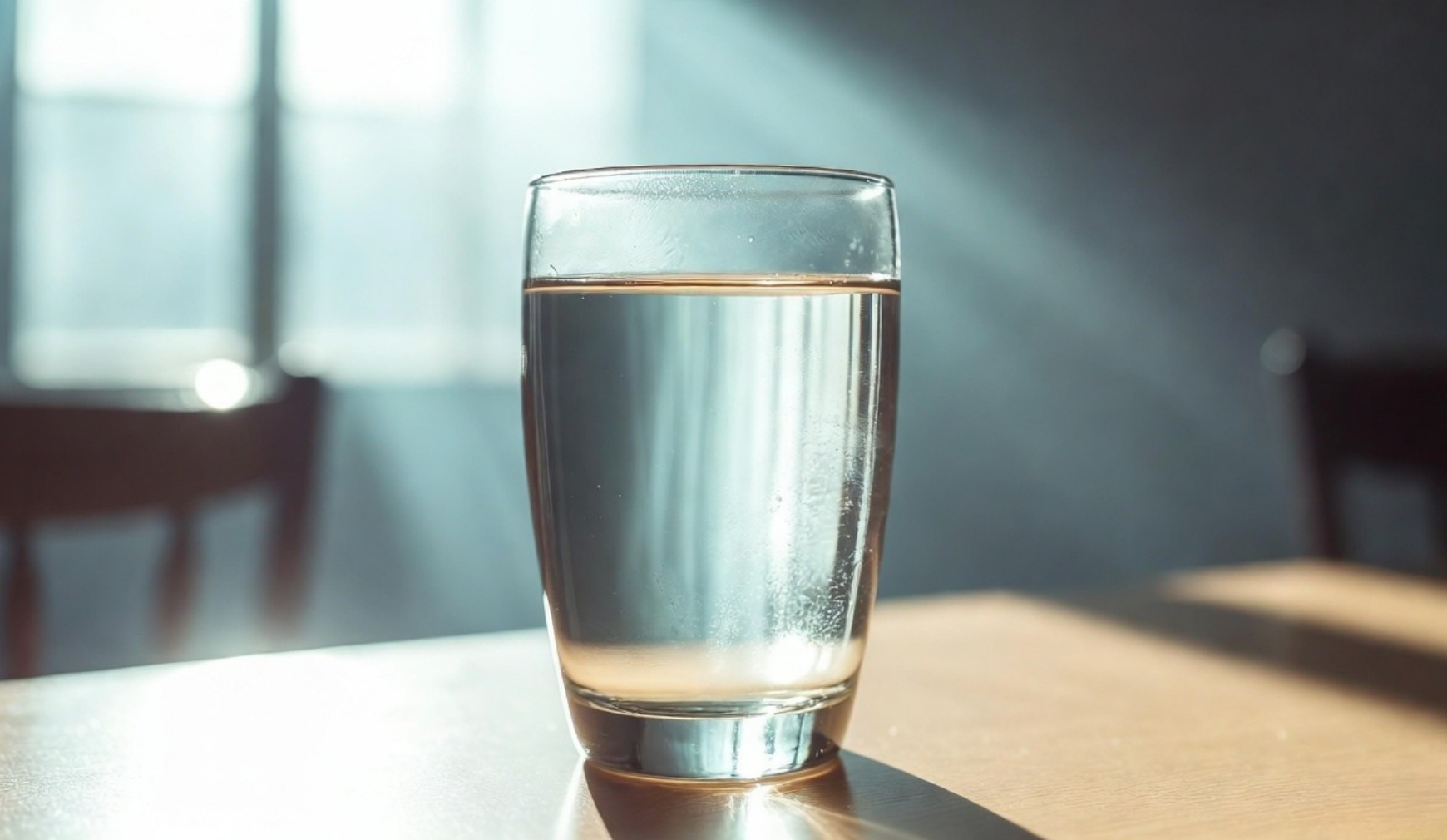
Five ways to start
Small habits beat big resolutions. Pick one or two and build from there.
Drink on arrival. Have a glass of water before your first patient, not after. Do it again before you leave for the day.
Tie sips to routines you already repeat. Take a few sips each time you wash your hands, enter a patient's room or finish a handover. The cue is built in.
Keep the bottle in sight. Keep a bottle at your workstation or in your bag as a quiet reminder. If you want a target, mark the bottle by the hour.
Eat some of your water. Cucumber, melon, oranges, tomatoes and celery all contribute. So do soups and yoghurt.
Check your urine colour. Pale yellow is the usual goal. Dark yellow or amber means you should drink more.
Beyond water: coffee, electrolytes and alcohol
What counts.
For most people, moderate amounts of coffee and tea still count toward your daily fluid intake. Water is the simplest choice, and a slice of lemon or lime makes it easier to drink without adding sugar.
When electrolytes help.
Sports drinks are designed for long, sweaty exercise. If you sweat heavily for more than an hour or two, such as in a hot theatre, during a heatwave, or during back-to-back long shifts, an electrolyte drink may help. For a normal shift, water and regular meals are usually enough.
What works against you.
Alcohol makes you lose more fluid and disrupts sleep so it can leave you more depleted the next day. Sugary drinks and energy drinks give a short lift, then a crash. If a hard day ends with a drink, start with a glass of water.
A team habit
Hydration should not rest on one person's discipline. Teams that treat it as part of the job make it easier for everyone.
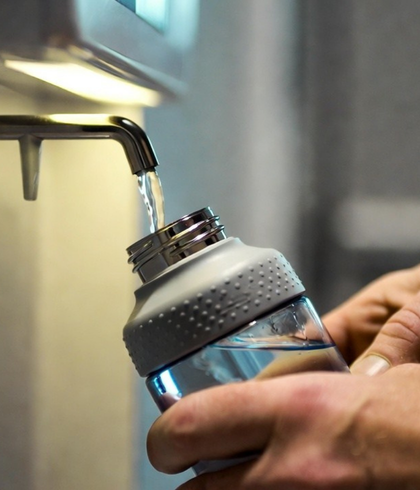
Make water easy to reach. A filtered tap or a water station near the nurses' station or theatre removes the excuse.
Protect two-minute breaks. A drink and a toilet stop are not a luxury. They are part of safe care.
Say it out loud. Add "Have you had a drink?" to handover, the way you would ask about a patient's fluids.
Lead by example. When seniors take their breaks and carry a bottle, juniors feel allowed to do the same.
If you lead a team, ask what stops your people from drinking. The answer is usually a rule or a rota you can change.
Know the signs
Mild dehydration often shows up as tiredness, dry mouth, headache, dizziness, poor concentration, or dark urine. Drink water, rest if you can, and check in an hour.
Get medical help if you have confusion, fainting, a racing heart, very little urine for many hours, or you cannot keep fluids down. Don't wait until the end of the shift.


Quote
A glass at a time


You would never let a patient go a whole shift without a drink. Give yourself the same care.
Patricia Maris, Founder, e7D-Wellness
Where does your wellbeing stand?
Hydration is one of the eight pillars of wellbeing in MarisMetrics, alongside Willpower, Breathing, Thoughts, Nutrition, Movement, Rest, and sexual vitality. If you are not sure where strain is building up, start with our free compassion fatigue assessment. It takes about 8 to 10 minutes, is private, and shows you where to begin.
Key Takeaways
Thirst arrives late, so drink before you feel it, and drink before your first patient.
Tie sips to routines you already repeat: handwashing, patient rooms and handovers.
Water is the simplest choice. Coffee and tea count for most people, and electrolyte drinks are for long, sweaty effort.
Hydration is a team habit. Make water easy to reach and protect time to drink and use the bathroom.
View Recommended Resources
1. The one on clinicians, which I’d lead with
El-Sharkawy AM, Bragg D, Watson P, Neal K, Sahota O, Maughan RJ, Lobo DN. Hydration amongst nurses and doctors on-call (the HANDS on prospective cohort study). Clinical Nutrition, 2016; 35(4): 935–942. Record
What it found: 92 nurses and doctors were recruited and 88 completed the study, across 130 shifts on UK hospital wards. By urine tests, 36% were dehydrated at the start of a shift and 45% at the end. Dehydrated staff did worse on some short-term memory tests.
Why it fits: it is the closest match to your readers, and it supports the point that clinicians run dry on shift.
Caution: the memory result is modest. The abstract says dehydrated people did significantly worse on two memory tests, but the full results describe only a trend on one working-memory test.
2. The one on concentration and mood
Ganio MS, Armstrong LE, Casa DJ, et al. Mild dehydration impairs cognitive performance and mood of men. British Journal of Nutrition, 2011; 106: 1535–1543. DOI 10.1017/S0007114511002005.
What it found: 26 young men lost about 1.6% of body mass through exercise. They made more errors on an attention task, were slower on a working-memory task, and reported more fatigue and tension or anxiety.
Why it fits: it backs up the article’s line that even mild dehydration can affect concentration and mood.
Caution: the participants were young men in a lab, so to keek the record straight this was “a controlled study of young men”



 Willpower




 Breathing