




 Movement
Thank you.
For every patient you've lifted, turned, walked, and carried through the night, while your own body waited its turn.
And a quiet question.
When your energy crashes mid-shift, is your body asking for coffee, or asking to move?
You've tried pushing through. But that 3 AM slump keeps coming back, because pushing through is the opposite of what your body needs. Stillness and strain drain you. Small, natural movement recharges you.
The good news: it takes 60 seconds, and you already know the moves. You learned them before you could talk.
What the research shows
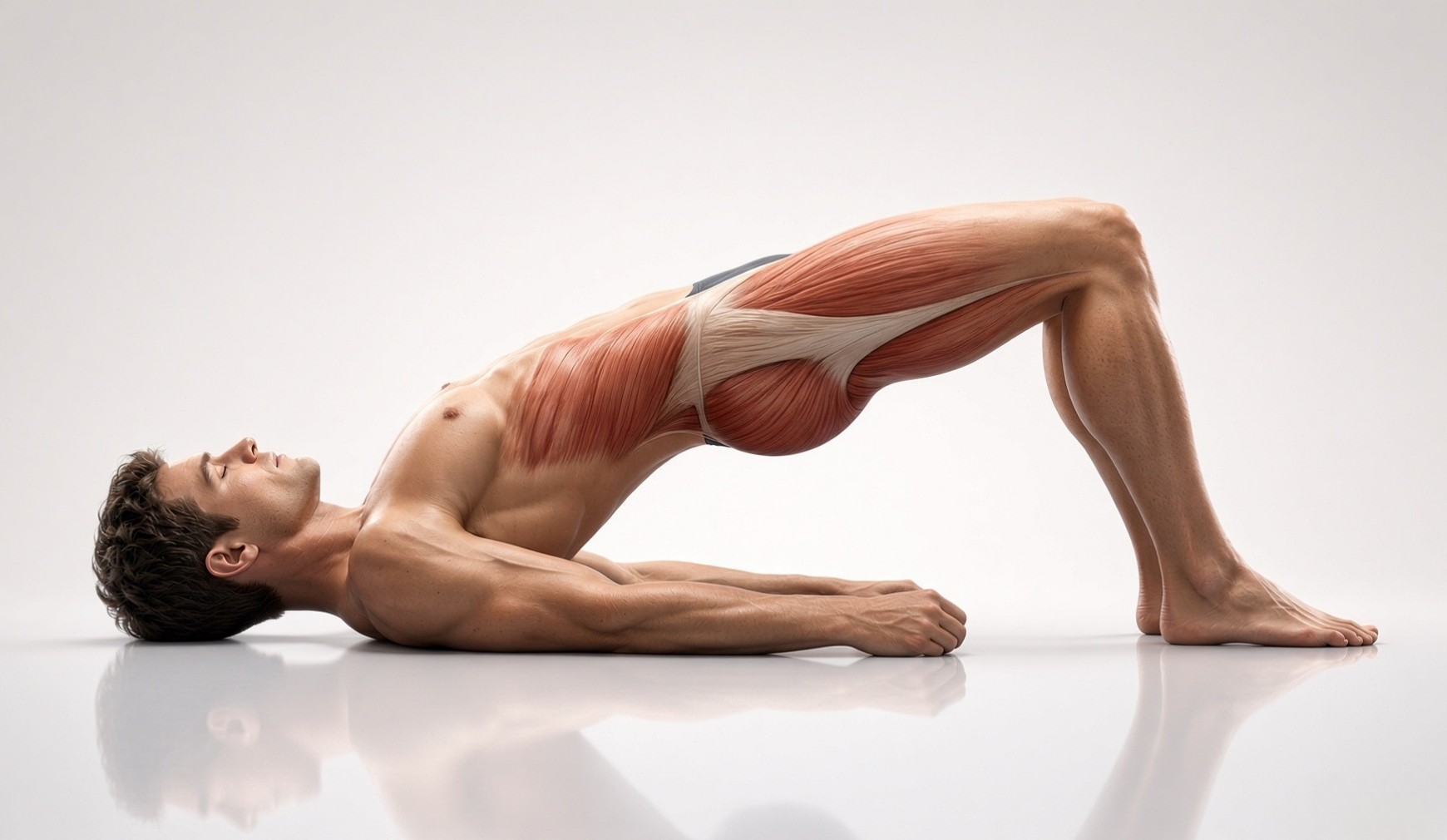
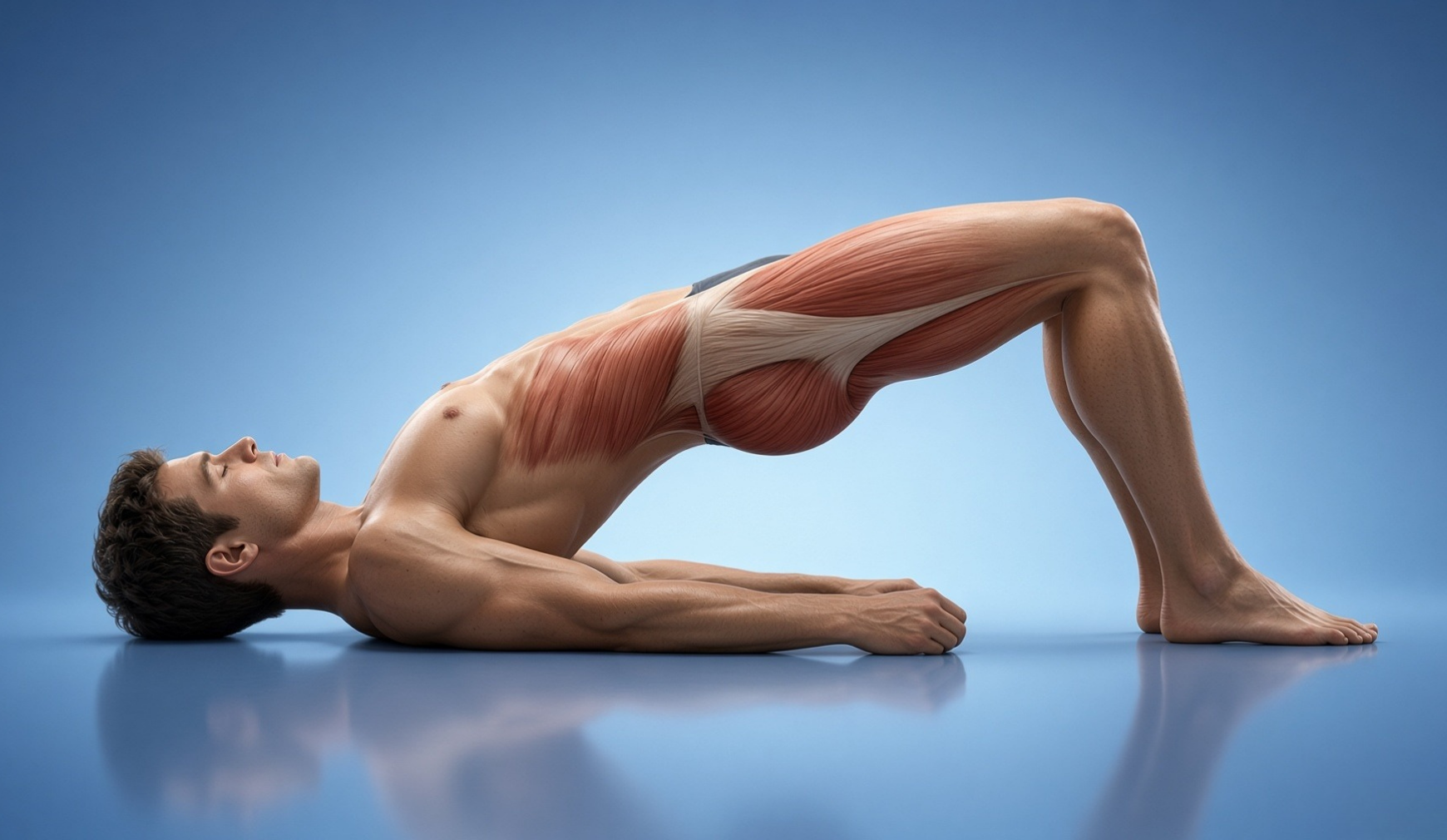
Short breaks lift energy. A meta-analysis of 22 study samples (2,335 people) found that micro-breaks of 10 minutes or less had a small but significant effect on boosting vigour and reducing fatigue. Overall, they did not improve task performance [1].
Movement snacks help the body and mind. A 2025 systematic review found that brief bouts of activity, usually 1 to 5 minutes, improved glucose control, blood pressure and strength, with emerging evidence for better mood, less fatigue and sharper thinking [2].
Seven patterns cover it all. The CHEK Institute's Primal Pattern® system groups all human movement into seven patterns: squat, lunge, bend, push, pull, twist and gait (walking, jogging, running) [3].
Treat these findings as a guide. Most studies were in office workers and general adults, not in clinicians on night shift.
Working in, not working out
Mid-shift, you don't need a workout. You've already spent energy all night. What you need is to work in: gentle, rhythmic movement, done with slow breathing, that gives energy back rather than taking more.
In the CHEK approach, the test is simple. You should finish a reset feeling more energised than when you started. If you're puffing, sweating or straining, it's become a workout. Slow down.
Three principles guide every move below:
Breathe first. Breathe through your nose and into your belly as you move. Breathing is the first pattern; every other one depends on it.
Move the way you're built to. The seven primal patterns are the moves your body learned as a baby: twisting, pushing, pulling, squatting, lunging, bending and walking. They feel natural because they are.
Undo the shift's posture. Hours bent over beds, charts and screens pull you forward and down. Each reset moves you the other way: up, back and open.
Real Talk: Arm circles and shoulder shrugs aren't wrong. They're just small. The primal patterns move your whole body at once, which is why 60 seconds can do so much.
The 60-second primal resets
Pick one reset per break, or one every hour or two. Move slowly, breathe through your nose, and stop anything that hurts.
Squat: the bench squat. Stand in front of a chair. Sit back slowly until you just touch the seat, then stand tall. Breathe in on the way down, out on the way up. 8–10 slow reps. Wakes up your legs and pumps blood back towards your heart.
Bend: the hip hinge. Feet hip-width, soft knees. Push your hips back and let your chest come forward with a long, flat back, as if closing a drawer with your bottom. Return tall. 8–10 reps. Teaches you to lift with your hips, not your lower back.
Twist: the standing rotation. Arms crossed over your chest, feet planted. Turn slowly from your middle, left, then right, eyes following. 10 each side. Releases a spine that's been locked forward for hours.
Push: the wall push-up. Hands on the wall at shoulder height, body in one line. Lower your chest towards the wall, then press away. 10 reps. Opens the chest and wakes up your upper body.
Pull: the doorframe row. Hold a sturdy doorframe at chest height, lean back with straight arms, then pull your chest towards your hands, squeezing your shoulder blades together. 8–10 reps. The best undo for a rounded, forward-shifted posture.
Lunge: the supported split squat. One hand on a wall or bench. Step one foot back and lower your back knee gently towards the floor, then rise. 5 each side. Builds the single-leg balance you use with every step.
Gait: the stair or corridor walk. Walk briskly for 60 seconds, swinging your arms and breathing through your nose. Take the stairs if you can. The simplest, most natural reset there is.
Try This Now: Stand up and do five slow bench squats, breathing in on the way down and out on the way up. Notice how your legs and head feel afterwards.
Good to know: If you have an injury, pain, a heart condition, or are pregnant, check with your GP or physiotherapist first, and choose the gentlest version of each move.
Breath, water and rhythm
Movement is one pillar. Your stamina at 3 AM also depends on three others.
Breathing. Before any reset, take three slow belly breaths: one hand on your chest, one on your belly, and let the lower hand move more. A longer breath out helps you settle. A full breath in helps you wake.
Hydration. Thirst often feels like tiredness. Keep a water bottle where you'll see it, and drink a few mouthfuls every time you wash your hands. Check the colour of your urine: pale straw is the aim.
Rest. On night shifts, your body clock is working against you. Protect your break, nap if you can, keep bright light low on the drive home, and keep your sleep times as regular as possible, even on days off.
Reflect: Which of these is weakest for you right now: breath, water, rest or movement? That's likely where your energy leaks first.


Working in, not working out
Mid-shift, you don't need a workout. You've already spent energy all night. What you need is to work in: gentle, rhythmic movement, done with slow breathing, that gives energy back rather than taking more.
In the CHEK approach, the test is simple. You should finish a reset feeling more energised than when you started. If you're puffing, sweating or straining, it's become a workout. Slow down.
Three principles guide every move below:
Breathe first. Breathe through your nose and into your belly as you move. Breathing is the first pattern; every other one depends on it.
Move the way you're built to. The seven primal patterns are the moves your body learned as a baby: twisting, pushing, pulling, squatting, lunging, bending and walking. They feel natural because they are.
Undo the shift's posture. Hours bent over beds, charts and screens pull you forward and down. Each reset moves you the other way: up, back and open.
Real Talk: Arm circles and shoulder shrugs aren't wrong. They're just small. The primal patterns move your whole body at once, which is why 60 seconds can do so much.
Sixty seconds, seven patterns, one body
You don't need a gym, a uniform change or an hour you don't have. You need one minute and the moves you were born knowing. Use them, and the shift stops taking more than it gives.


"Master the seven ways your body was made to move: bend, squat, lunge, push, pull, twist and walk. Function is not a bonus of a long life. It is the foundation of one."
— Patricia Maris
What the studies cannot tell us
Most research on micro-breaks and movement has focused on office workers and the general populations, mainly looking at performance gains.
Micro-breaks improved energy levels, but they did not reliably improve overall task performance [1].
The best dose. Studies used different moves, timings and lengths. Start small and notice what works for your body.
When to get help
Tiredness that doesn't lift with rest isn't something to push through. See your GP if you're exhausted most days, short of breath, dizzy, or have pain that keeps coming back.
If you're feeling low, numb, or like you can't keep going, please talk to someone: your GP, a psychologist, or a colleague you trust. If you need to talk now, call Lifeline on 13 11 14. In an emergency, call 000.
How strong is your Movement pillar, really?
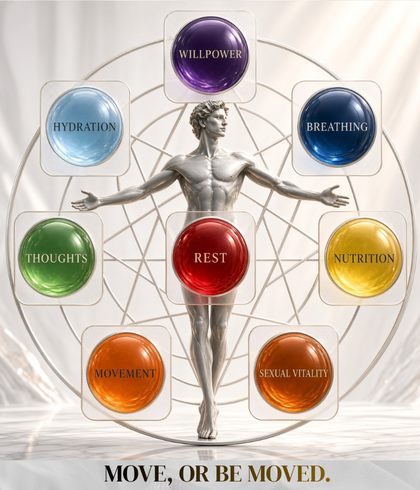
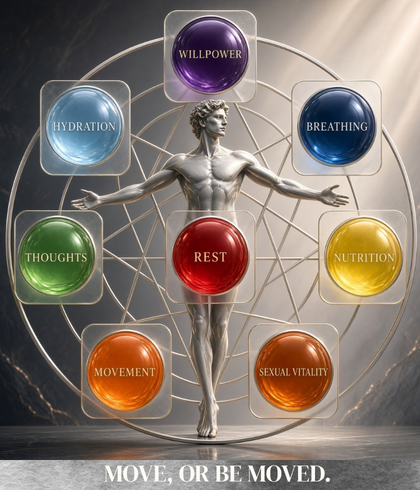
The MarisGraph Assessment looks at all 8 pillars of your vitality: Willpower, Breathing, Hydration, Thoughts, Nutrition, Movement, Rest and Sexual Vitality. It's not a diagnosis. It's a clear picture of where to start.
Your score for Movement and the other 7 pillars
Your lowest pillar revealed first, free
About 20 minutes to complete
TAKE THE MARISGRAPH ASSESSMENT
Key Takeaways
Short breaks restore energy. Micro-breaks of 10 minutes or less lift vigour and reduce fatigue [1].
Work in, don't work out. A mid-shift reset should leave you with more energy, not less.
Use the seven primal patterns. Squat, bend, twist, push, pull, lunge and walk move your whole body in 60 seconds [3].
Breathe, drink, rest. Movement works best alongside your other pillars.
Fatigue that won't lift needs a check-up. See your GP, and reach out if you're struggling.
View Recommended Resources
Albulescu P, Macsinga I, Rusu A, Sulea C, Bodnaru A, Tulbure BT. "Give me a break!" A systematic review and meta-analysis on the efficacy of micro-breaks for increasing well-being and performance. PLOS ONE. 2022;17(8):e0272460. doi:10.1371/journal.pone.0272460 source
Alexe DI, Saha S, Choudhary PK, Alexe CI, et al. Exercise snacks as a strategy to interrupt sedentary behaviour: a systematic review of health outcomes and feasibility. Healthcare. 2025. doi:10.3390/healthcare13243216 source
CHEK Institute. Primal Pattern® Movements. source


 Insight




 Breathing







 Sexual Vitality
