
 Thoughts
You spend your shifts holding other people's pain. Yet many healthcare professionals say very little about their own, and carry it alone. Loneliness in healthcare is rarely about being physically alone. It is feeling unseen in a crowded ward.
This article explores why it happens, what it can do to you, and small steps you and your colleagues can take. If you are struggling right now, go straight to "If you need help today" near the end.
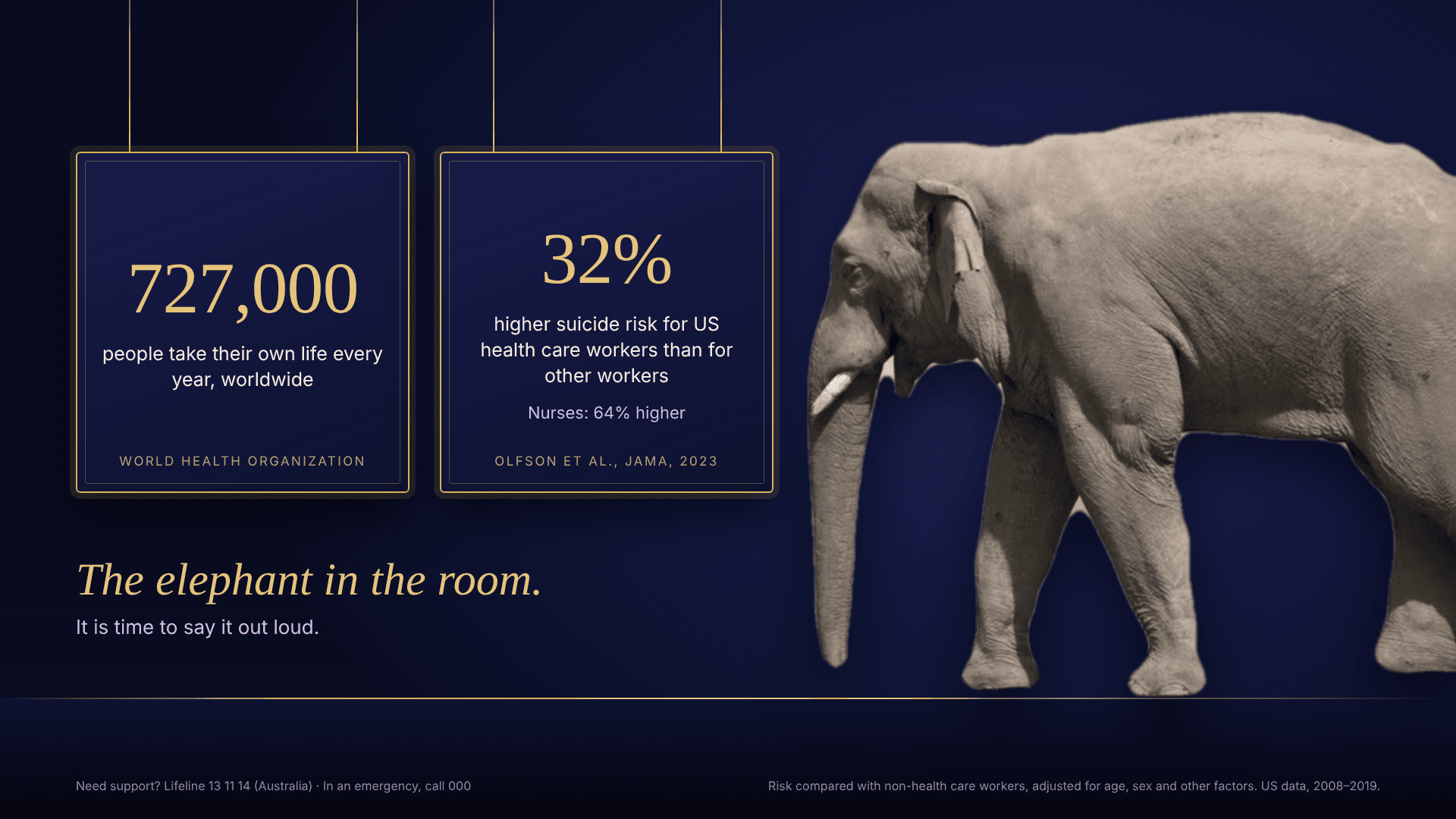
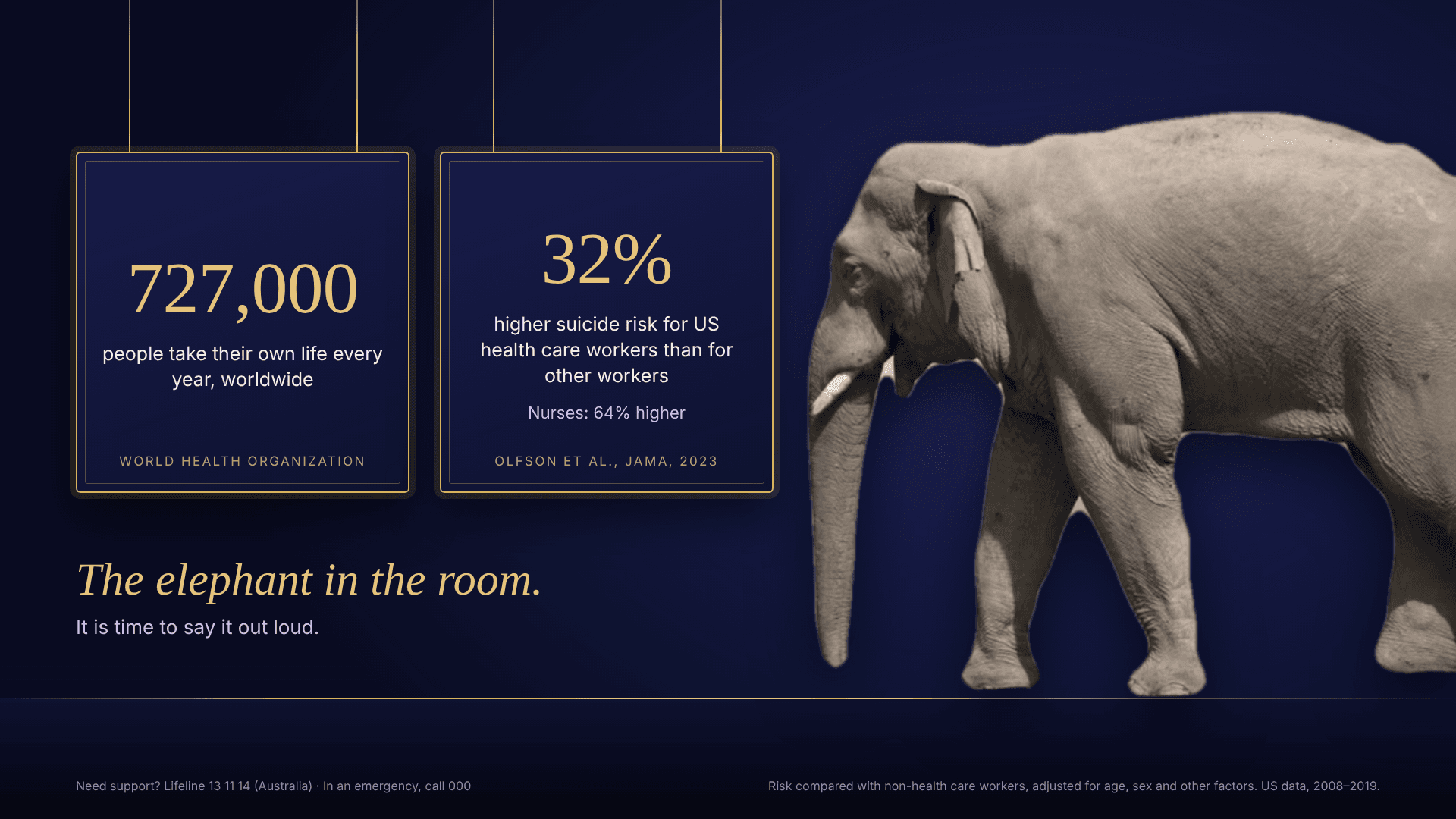
The elephant in the room
Silence does not mean fine. Healthcare training teaches you to stay composed, put the patient first and keep going. That is a strength. It can also make it hard to say, "I am not coping."
Worries that keep us quiet. Many clinicians fear being judged, being seen as less capable, or what asking for help might mean for their career. So they carry on, and the people around them do not know.
Naming it is the first step. When we say out loud that loneliness and burnout are part of the job for many of us, it stops being a private failing. It becomes something we can talk about and act on.
Why loneliness hits clinicians
A crowd, and still alone. You work beside people all day, but shifts leave little time for real conversation. Long and irregular hours also cut into time with friends and family.
Hard to explain to others. It can be difficult to share what you have seen at work with people outside healthcare. Over time, many clinicians stop trying.
Pressure to compartmentalise. You are expected to set your feelings aside to do the job. That works in the moment. When you are exhausted, it works less well, and feelings you pushed down can come out as numbness, irritability or resentment.
The weight you carry
Other people's worst days. You see pain, suffering and loss, often with little time to process it. Over the years, this can wear down your emotional resilience, especially if you rarely get to switch off the caring role.
Burnout and compassion fatigue. Chronic stress, exhaustion and emotional strain are linked with burnout and compassion fatigue. Both are well recognised in healthcare. They are not signs of weakness. They can happen when care goes out, and little comes back in.
When it becomes serious, research suggests that suicide risk is higher among some groups of doctors and nurses than in the general population (Dutheil et al., 2019). This is a hard fact to read. It also shows why we should talk about it earlier and more openly.


Signs to watch for
In yourself. Any one of these is common on its own. If they cluster and last for weeks, it's a reason to talk to someone.
Pulling away from friends and family, or feeling like no one understands
Exhaustion that sleep does not fix
Dread before a shift, or feeling numb at work
Irritability, anger or tearfulness that is out of character
Poor sleep, or lying awake replaying the day
Low mood, or feeling that nothing is worth the effort
In a colleague. Look for changes from how they usually are: quieter, more short-tempered, running late, skipping breaks, or leaving the room more often. You do not need to be sure. Noticing is enough to start a conversation.
When to act quickly. If anyone talks about hopelessness, being a burden or wanting to die, take it seriously and get help the same day. See "If you need help today".
Switching off the wrong way
The easy escape. After a hard shift, it is natural to look for relief. Endless scrolling, late-night gaming, gambling, online shopping or drinking more than you intend can feel like a break. Over time, they can cost you sleep, money and connection, and leave you more tired.
A kinder test. Ask yourself: after this, do I feel better or just numb? Does it help me sleep, or keep me up? Would I be comfortable telling a friend about it?
Swap, don't just stop. Replace one habit at a time with something that refills you, like a walk, a call with a friend, a hobby, or a few minutes of quiet. If a habit feels out of your control, speak to your GP. Help is available, and needing it is not a failure.
What helps
Be heard. Talk to someone who understands the work: a trusted colleague, a friend, a peer support program or a counsellor. You do not have to have the right words.
Protect your basics. Sleep, regular meals, movement, and time off aren't luxuries. They are what steady your mind. Plan breaks and days off, and use them.
Make small boundaries. Create a ritual to separate work from home, like a walk, a shower, or a few minutes of music, so you don't carry the shift through the door.
Get professional support early. A GP, psychologist or counsellor can help with low mood, anxiety, burnout and sleep problems. Seeing someone sooner usually makes things easier.
Reflect on what matters. Reconnecting with why you chose this work and the parts of life outside work can restore meaning and purpose.


How to start the conversation
If you are worried about a colleague. Choose a private moment. Start gently and be specific:
"I have noticed you seem quieter lately. How are you going?"
"You have been carrying a lot. Is there anything I can do?"
Then listen. Try not to fix, minimise or give advice straight away. If they open up, thank them for trusting you. Offer to help them find support, and check in again in a day or two.
If you are worried about their safety, ask directly. Ask directly: "Are you thinking about suicide?" Asking does not put the idea in their mind. It shows you care and permits them to answer honestly. If the answer is yes, do not leave them alone, and get help straight away (see "If you need help today").
Suppose you are the one struggling. Pick one person you trust and tell them this week, even if you only say, "I have not been myself lately." You do not need a plan. You only need to say the first sentence.
Protecting yourself and your team
Make it normal to talk. Teams do better when it is safe to say, "I am finding this hard." Leaders can go first. Add "How are you going?" to handover, and mean it.
Offer real support. Counselling, peer support and stress management programs work best when they are easy to reach, private and well known. Tell people where they are, more than once.
Think about safety in a crisis. In a crisis, easy access to medicines or other means can increase risk. Making them harder to reach is a recognised way to prevent suicide (Zalsman et al., 2016). If you are struggling, consider asking someone you trust to hold or lock away anything you could use to hurt yourself, and talk to your GP. If you are worried about a colleague, don't leave them alone; call for help.
Reaching out is part of the job.
You would never leave a colleague struggling alone on the ward. Give yourself the same standing offer, and let someone hold you the way you hold everyone else.


The people who hold everyone else up need someone to hold them up, too.
Patricia Maris, Founder, e7D-Wellness
Where does your wellbeing stand?
Loneliness and burnout rarely sit alone. They show up across sleep, thoughts, movement and more. MarisMetrics looks at eight pillars of wellbeing: willpower, Breathing, Hydration, Thoughts, Nutrition, Movement, Rest, and sexual vitality. If you are not sure where the strain is building up, start with our free compassion fatigue assessment. It takes about 8 to 10 minutes, is private, and shows you where to begin.
Start free assessment (button in the sidebar card)
Key Takeaways
Loneliness and burnout are common in healthcare. They are not a sign of weakness.
Notice early signs in yourself and your colleagues, especially when they cluster over weeks.
Small habits help: be heard, protect your sleep, set boundaries and ask for support early.
A short, kind question can start the conversation. If you are worried about someone's safety, ask directly.
If you need help today, call Lifeline on 13 11 14, Beyond Blue on 1300 22 4636 or Nurse & Midwife Support on 1800 667 877. In an emergency, call 000.
View Recommended Resources
Dutheil F, et al. Suicide among physicians and health-care workers: a systematic review and meta-analysis. PLoS ONE, 2019; 14(12): e0226361. Zalsman G, et al. Suicide prevention strategies revisited: 10-year systematic review. The Lancet Psychiatry, 2016; 3(7): 646–659. General information only. It is not a substitute for professional advice.



 Hydration




 Sexual Vitality